
Technology
Designed for human tissues. Built for clinical translation.
Glue4Life is a family of fully animal-free, hyaluronic acid-based hydrogels and bioinks developed for human tissue engineering, 3D bioprinting and biofabrication. Designed for engineering human soft tissues, the materials are biodegradable, chemically defined, soft and elastic, and suitable for printing, injection and pipetting — with no additional crosslinking required.
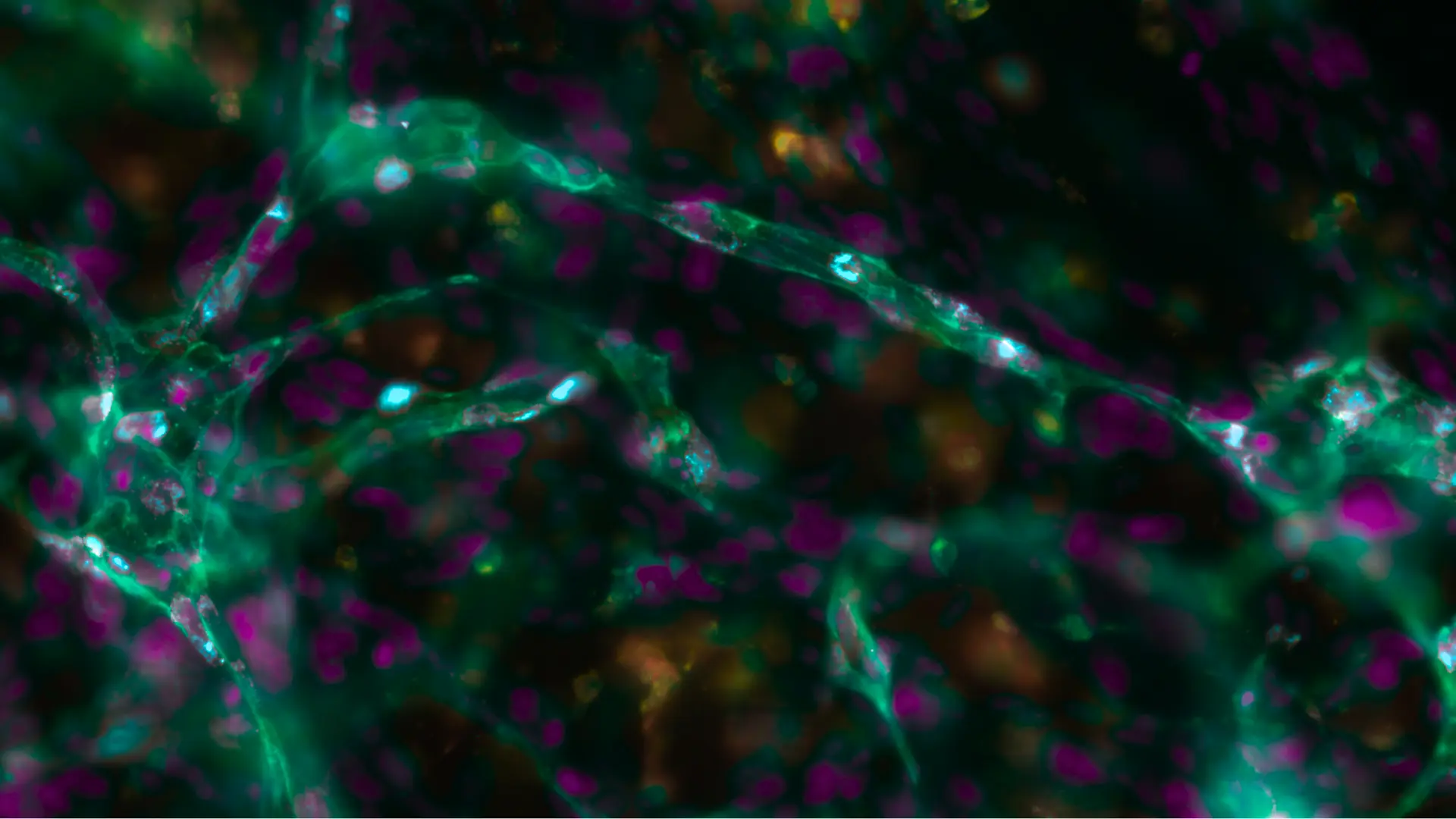
Platform highlights
Why Glue4Life
Animal-free
No animal-derived matrix components
Biodegradable
Designed to biodegrade over time
Soft & elastic
Designed to support delicate human cells
Cytocompatible
Designed to support cell viability and function
Chemically defined
Controlled and reproducible composition
Clinically translatable
Designed with future clinical use in mind
No additional crosslinking
No unnecessary complexity
Versatile handling
Printable, injectable and easy to use by pipette
Workflow
From hydrogel to tissue construct
The Glue4Life workflow is simple: combine the hydrogel with your cells, then print, inject, or pipette it into a tissue construct. No additional crosslinking required.
- Step 1
Glue4Life + Cells
Mix cells with the animal-free HA hydrogel.
- Step 2
Print / Inject / Pipette
Extrude, inject or pipette with easy handling.
- Step 3
Automatic gelation
Crosslinks automatically at room temperature — no additional steps or UV needed.
- Step 4
Tissue construct
Soft, elastic matrix supporting cells into functional tissue.

Platform opportunity
One platform. Multiple tissues. Multiple applications.
Product portfolio
Application areas
- Neural tissue engineering
- Vascularized tissue constructs
- Liver biofabrication
- Innervated tissue constructs
- Cell delivery
- Corneal tissue engineering
- Regenerative medicine
- 3D in vitro models
- Skin tissue engineering
- Multi-material bioprinting
Published Research
Scientific Publications
Independent and collaborative peer-reviewed studies utilizing the Glue4Life platform. Listed newest first.
- 2026
Bilayer Fiber-Reinforced Composite-Hydrogel Scaffolds With Bioactive Glass for Bone Tissue Regeneration
Gibreel M, Ohlsbom R, Perea-Lowery L, Lassila L, et al.
Journal of Biomedical Materials Research Part A, 114 (2026)
- Bone Regeneration
- Hydrogels
- Tissue Engineering
A bilayer scaffold combining fiber-reinforced composite and hydrogel with bioactive glass demonstrates strong potential for bone tissue regeneration, supporting cell growth and osteogenic activity.
Read publication - 2026
In Vivo Evaluation of Injected and Bioprinted Hyaluronic Acid-Based Bioink in Corneal Stromal Pocket
Kethiri A, Puistola P, Huuskonen M, Huhtanen S, et al.
Macromolecular Bioscience, 26 (2026)
- Corneal Stroma
- 3D Bioprinting
- Bioinks
- Hydrogels
An injectable and bioprintable hyaluronic acid-based bioink is evaluated in an in vivo corneal stromal pocket model, demonstrating biocompatibility and integration with host tissue.
Read publication - 2025
Compartmentalized 3D bioprinting of the limbal niche with distinct hPSC-LSC subpopulations for corneal disease modeling
Kauppila M, Mörö A, Valle-Delgado J, Huhtanen S, et al.
Acta Biomaterialia, 201 (2025)
- 3D Bioprinting
- Human Stem Cells
- Corneal Epithelium
- Stem Cell Differentiation
Compartmentalized 3D bioprinting recreates the limbal stem cell niche using distinct hPSC-derived subpopulations, enabling advanced in vitro modeling of corneal disease.
Read publication - 2025
Multi-material 3D bioprinting of human stem cells to engineer complex human corneal structures with stroma and epithelium
Puistola P, Huhtanen S, Hopia K, Miettinen S, et al.
Bioprinting, 46 (2025)
- Multi-Material 3D Bioprinting
- Human Stem Cells
- Corneal Stroma
- Corneal Epithelium
Multi-material 3D bioprinting with human stem cells produces complex corneal structures combining stroma and epithelium, advancing tissue-engineered cornea replacements.
Read publication - 2024
Hyaluronic Acid-Based 3D Bioprinted Hydrogel Structure for Directed Axonal Guidance and Modeling Innervation In Vitro
Honkamäki L, Kulta O, Puistola P, Hopia K, et al.
Advanced Healthcare Materials, 14 (2024)
- 3D Bioprinting
- Hydrogels
- Neural Tissue Engineering
- 3D Cell Culture
A hyaluronic acid-based 3D bioprinted hydrogel structure directs axonal growth, providing a platform for modeling tissue innervation in vitro.
Read publication - 2024
Bioprinting of human pluripotent stem cell derived corneal endothelial cells with hydrazone crosslinked hyaluronic acid bioink
Grönroos P, Mörö A, Puistola P, Hopia K, et al.
Stem Cell Research & Therapy, 15 (2024)
- 3D Bioprinting
- Human Stem Cells
- Bioinks
- Cell Therapy
Human pluripotent stem cell-derived corneal endothelial cells are successfully bioprinted using a hydrazone-crosslinked hyaluronic acid bioink, maintaining cell phenotype and function.
Read publication - 2024
Cornea-Specific Human Adipose Stem Cell-Derived Extracellular Matrix for Corneal Stroma Tissue Engineering
Puistola P, Kethiri A, Nurminen A, Turkki J, et al.
ACS Applied Materials & Interfaces, 16 (2024)
- Human Adipose-Derived Stem Cells
- Corneal Stroma
- Tissue Engineering
Cornea-specific extracellular matrix derived from human adipose stem cells provides a biomimetic environment for corneal stroma tissue engineering.
Read publication - 2024
Novel strategy for multi-material 3D bioprinting of human stem cell based corneal stroma with heterogenous design
Puistola P, Miettinen S, Skottman H, Mörö A
Materials Today Bio, 24 (2024)
- Multi-Material 3D Bioprinting
- Human Stem Cells
- Corneal Stroma
A novel multi-material 3D bioprinting strategy fabricates human stem cell-based corneal stroma with heterogeneous design, closely mimicking native tissue architecture.
Read publication - 2022
Hyaluronic acid based next generation bioink for 3D bioprinting of human stem cell derived corneal stromal model with innervation
Mörö A, Samanta S, Honkamäki L, Rangasami V, et al.
Biofabrication, 15 (2022)
- Bioinks
- 3D Bioprinting
- Corneal Stroma
- Neural Tissue Engineering
A next-generation hyaluronic acid-based bioink enables 3D bioprinting of a human stem cell-derived corneal stromal model with integrated innervation.
Read publication